
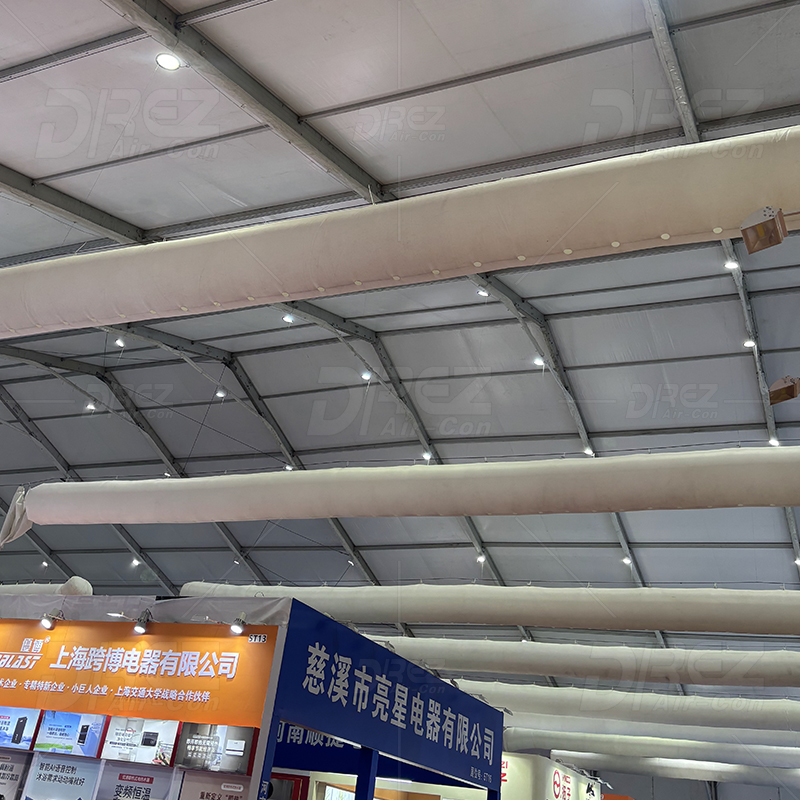
Exhibition tents are often exposed to high temperatures, strong sunlight, and large crowds. Many organizers face the same challenge: the space heats up quickly, but cooling it down takes too long.
This article explains how to achieve fast and effective cooling in exhibition tents using practical, real-world methods.
1. Why Exhibition Tents Are Hard to Cool Quickly
Before solving the problem, it’s important to understand why cooling is slow:
- Continuous heat gain from sunlight
- Poor insulation of tent materials
- Frequent door opening and air leakage
- High internal heat load from people, lighting, and equipment
Conclusion: Cooling is not just about lowering temperature—it’s about overcoming constant heat input.
2. Core Principles of Fast Cooling
To reduce temperature quickly, three factors must work together:
- High cooling capacity (remove heat quickly)
- Strong airflow (distribute cold air efficiently)
- Correct air circulation (avoid hot air accumulation)
Key insight: Increasing airflow is just as important as increasing cooling power.
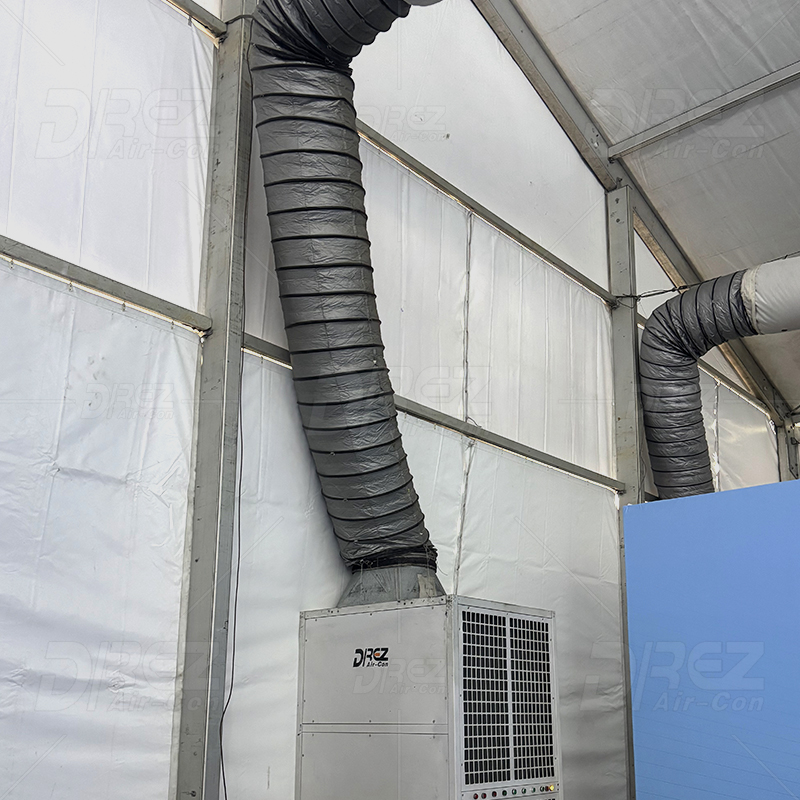
3. Pre-Cooling Strategy (Most Effective Method)
The fastest way to achieve a comfortable environment is to start cooling before the event begins.
- Turn on air conditioning 1–2 hours in advance
- Close unnecessary openings to reduce heat gain
- Allow the system to stabilize before people enter
Conclusion: Pre-cooling can reduce perceived temperature by 30–50% at event start.
4. Choosing the Right Equipment for Fast Cooling
Not all cooling systems can deliver rapid results. Equipment selection directly affects performance.
Tent-Specific Air Conditioners
- High airflow output
- Long-distance air supply
- Designed for temporary structures
Best choice for rapid cooling in exhibition environments.
Packaged Central Air Conditioning Units
- Stable performance for large areas
- Suitable for continuous operation
Recommended for large-scale exhibitions with long durations.
Portable Industrial Air Conditioners
- Quick deployment
- Flexible positioning
Useful for localized or emergency cooling needs.
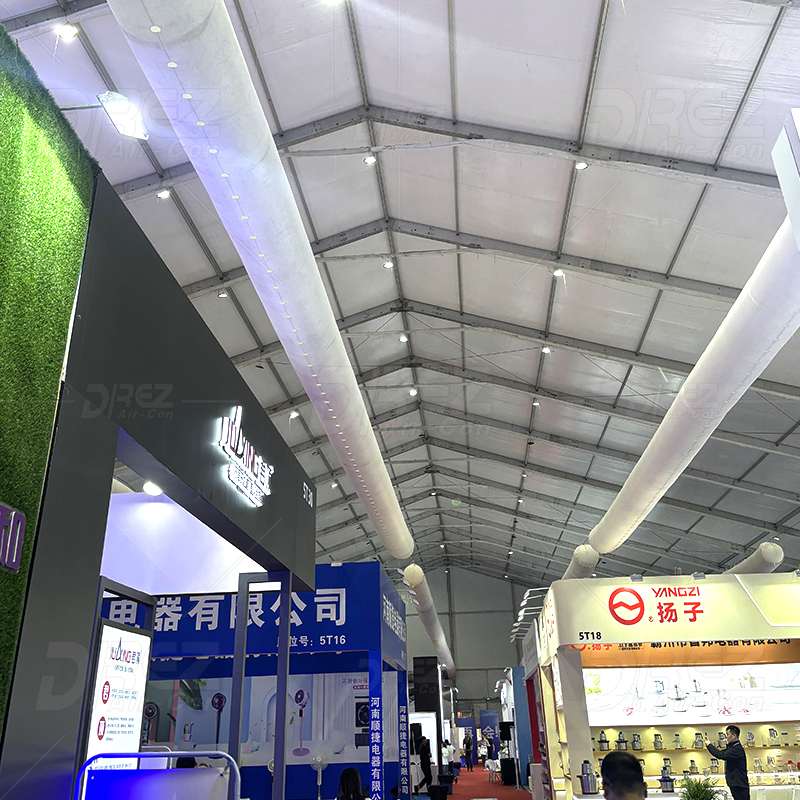
5. Airflow Optimization (Critical for Speed)
Even with powerful equipment, poor airflow design slows down cooling.
- Direct cold air toward high-heat zones (crowds, lighting areas)
- Avoid short cycling (cold air returning immediately to the unit)
- Use ducts to extend airflow to the center of the tent
Conclusion: Optimized airflow can improve cooling speed by over 30%.
6. Equipment Layout Strategy
Proper placement of units is essential:
- Install units evenly around the tent perimeter
- Avoid clustering all units in one area
- Ensure airflow covers the entire space
Tip: Symmetrical layout improves temperature balance and cooling efficiency.
7. Real Exhibition Scenario Example
Case: 600㎡ Exhibition Tent in Summer
- High crowd density
- Outdoor temperature above 32°C
- Continuous foot traffic
Effective solution:
- Use high-capacity tent air conditioners
- Start pre-cooling 2 hours before opening
- Combine with ducted airflow for full coverage
Result: Temperature stabilized quickly and remained comfortable throughout the event.
8. Common Mistakes That Slow Down Cooling
- Using undersized air conditioning systems
- Ignoring airflow design
- Turning on cooling only after the event starts
- Poor equipment placement
These mistakes significantly delay cooling and reduce overall effectiveness.
9. Related Topics for Better Optimization
- How to design a tent air conditioning system
- How to choose the right tent air conditioner
- Tent air conditioner cost analysis
- Best cooling solutions for outdoor events
Connecting these topics helps build a complete solution system and improves SEO performance.
10. Final Summary
Fast cooling in exhibition tents is not achieved by a single factor—it requires a coordinated approach.
- Use high-capacity, high-airflow equipment
- Start pre-cooling early
- Optimize airflow and layout
Final conclusion: The fastest cooling results come from combining correct equipment, proper timing, and efficient airflow design.
If you want immediate and stable cooling performance, system design matters more than simply increasing power.