
Have you ever noticed that many tent cooling setups use long air ducts instead of blowing cold air directly from the unit? At first glance, it might seem unnecessary. Why not just let the air come out of the machine?
Once you look at how tents behave in hot conditions, the reason becomes much clearer.
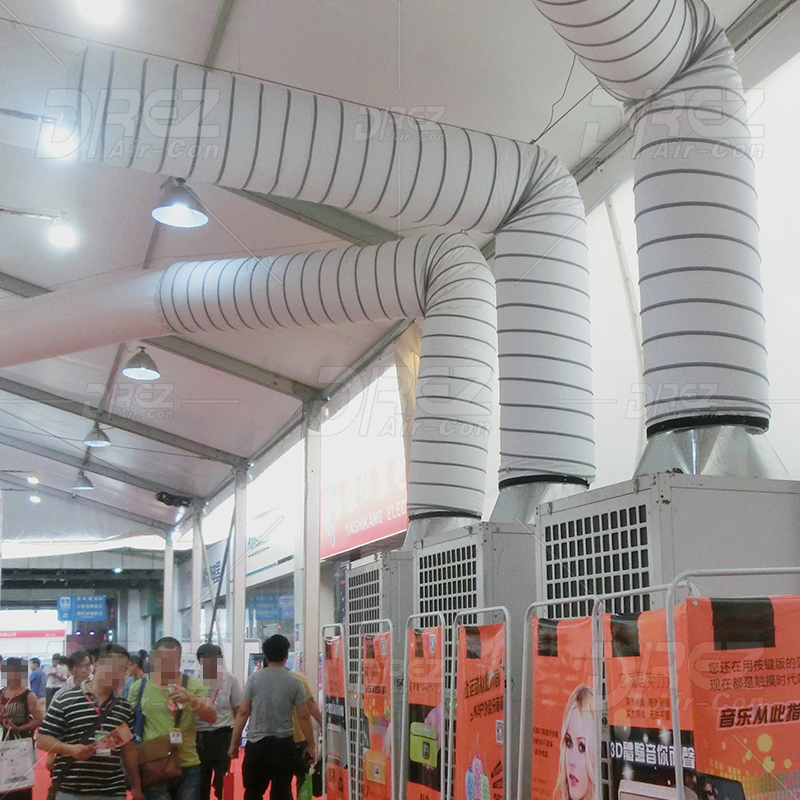
Tents Don’t Hold Air the Same Way
Unlike enclosed spaces, tents constantly lose and gain air:
- Openings let hot air flow in and out
- The structure doesn’t trap cool air effectively
- Heat builds up quickly under the roof
If cold air is released in one spot, it tends to stay there instead of spreading evenly.
Cold Air Needs to Travel Further
Think about a large tent. If the cooling unit sits outside or at the edge, how does the cold air reach the center?
Without ducts:
- Air loses strength quickly
- Only nearby areas feel cool
- The middle stays warm
With ducts:
- Air is pushed deeper into the tent
- Cooling reaches more people evenly
- Temperature becomes more consistent
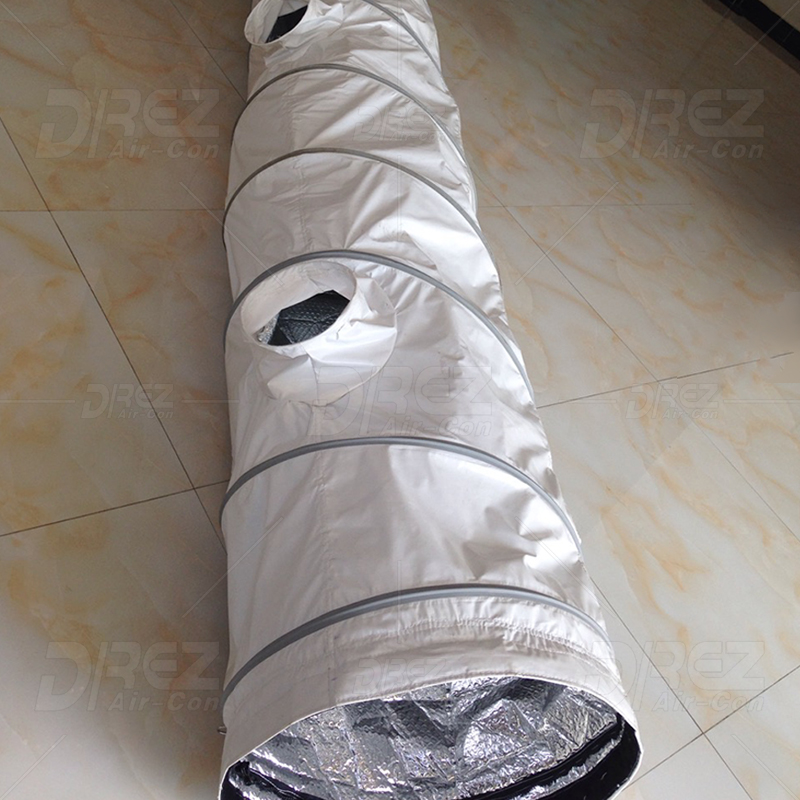
Better Control Over Airflow Direction
Have you ever felt one side of a tent freezing while another side stays hot? That usually comes from poor airflow control.
Ducted systems allow you to:
- Guide air exactly where it’s needed
- Avoid cold air piling up in one area
- Target high-heat zones like crowded sections
This makes a big difference in real use.
Prevent Cold Air From Circling Back Too Quickly
Here’s something people don’t always think about. When cold air comes out and immediately returns to the unit, it reduces efficiency.
This is called short circulation.
Ducts help by:
- Extending the air path
- Keeping cold air moving through the space longer
- Improving overall cooling performance
More Flexible Equipment Placement
In many setups, the cooling unit is placed outside the tent. This helps reduce noise and frees up space inside.
Ducts make this possible by:
- Connecting the unit to the interior space
- Allowing flexible positioning of equipment
- Keeping the layout clean and organized
Without ducts, placement options become very limited.
What Happens Without Ducts?
Let’s picture a setup without any air distribution:
- The area near the unit feels cold
- Far areas remain hot
- Cooling feels uneven and slow
Now compare that with a ducted setup:
- Air reaches deeper into the tent
- Temperature feels balanced
- Cooling becomes faster and more noticeable
The difference is easy to feel within minutes.
Ducted air supply is used because tents require controlled and extended airflow. It allows cold air to travel further, spread evenly, and stay effective inside a space that constantly loses temperature.
Once you see how air moves inside a tent, using ducts stops feeling optional—it becomes part of making the whole system actually work.